Virtual staging is one of the cheapest ways to make a vacant listing look lived-in, but the rules around it changed in late 2024 and a lot of GTA agents are still using it incorrectly. Here is what virtual staging actually is, what PropTx allows on MLS, and why hand-edited staging matters more than ever.
Virtual staging is one of the most cost-effective tools available to GTA real estate agents. A vacant listing that costs $39 per image to virtually stage versus thousands of dollars to physically furnish is not a close comparison on price.
But the rules changed in December 2024 when PropTx, the MLS system used by every major GTA real estate board including TRREB, introduced new image rules. A lot of agents are still using virtual staging incorrectly, and the cheap AI tools that flooded the market over the last two years are now creating real compliance risk.
Here is what GTA agents actually need to know.
What Virtual Staging Is
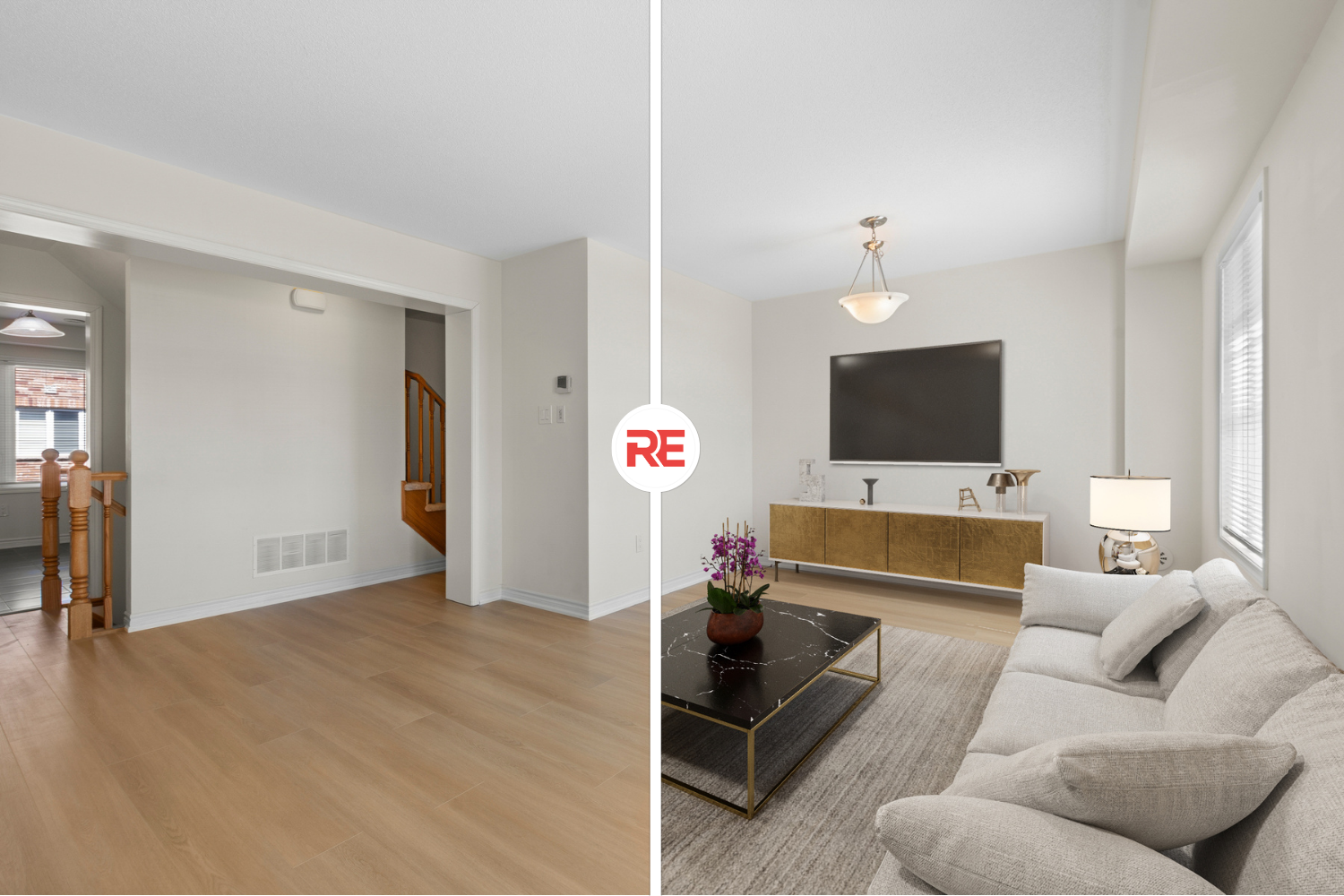
Virtual staging is the process of digitally adding furniture, decor, and styling to a photograph of an empty room. The goal is to help buyers visualize the space as a lived-in home rather than an empty box.
Done well, virtual staging looks photorealistic. Furniture is scaled correctly to the room. Lighting matches the original photo. Style is consistent across the listing. Done poorly, it looks like a video game cutscene was pasted into your listing.
The two main approaches in 2026 are AI virtual staging and hand-edited virtual staging. The difference matters more now than it did two years ago.
AI Virtual Staging vs Hand-Edited Virtual Staging
AI tools like Collov, Apply Design, and Virtual Staging AI generate furniture into a room photo automatically. The agent or photographer uploads the empty room, picks a style, and the tool spits out a staged image in seconds. Cost is usually under $1 per image.
The problem is that generative AI tools rebuild the entire image. They do not just add furniture, they regenerate the room. That means walls can shift slightly. Windows can change shape. Flooring can change colour. Light fixtures can disappear. None of these changes are intentional, but they happen because of how the underlying technology works.
Hand-edited virtual staging is done by a real designer. They take the original room photo, layer in furniture and decor manually, match the lighting, and deliver an image where the only thing that changed is the addition of furniture. The room itself stays exactly as it was photographed.
Cost is higher, typically $25 to $50 per image. But the result is compliant, consistent, and does not introduce structural changes that the new MLS rules specifically prohibit.
REPhotos uses hand-edited virtual staging at $39 per image specifically because of these compliance and quality issues with AI tools.
The PropTx MLS Rules: What Changed in December 2024
PropTx is the MLS system that powers TRREB, OREB, and most other major Ontario real estate boards. New image rules took effect December 2, 2024, and they directly affect how virtual staging can be used on MLS.
The key rule: digitally altered images, including those created or enhanced by AI, are prohibited if they do not accurately depict the listing. Photos must accurately represent the property's actual physical state.
What this means in practice:
- Adding furniture to an empty room is still permitted, but only if the room itself is not altered.
- Removing existing furniture, structural elements, or features is not permitted.
- AI-generated images that change the room itself are not permitted, even if the change was unintentional.
- Disclosure is required. Virtually staged photos should be clearly labelled, and the listing description should note that some photos are virtually staged.
- Best practice is to include the original unstaged photo alongside the staged version, so buyers can see both.
The rules are written broadly on purpose. Enforcement is at the discretion of the boards. But the direction is clear: misleading buyers with digitally altered photos is no longer acceptable, and agents are expected to use virtual staging responsibly.
What Virtual Staging Can and Cannot Do Under the New Rules
Allowed:
- Adding furniture to an empty room
- Adding decor, rugs, art, and accessories
- Showing how a space could be styled
- Day-to-dusk twilight conversions on exteriors (with disclosure)
Not allowed:
- Removing existing furniture or features
- Changing wall colour, flooring, or countertops
- Adding fixtures that do not exist (fireplaces, windows, built-ins)
- Altering room dimensions or shape
- Removing defects, damage, or structural issues
- Changing exterior elements like neighbouring properties or views
The principle is straightforward. Virtual staging is for showing buyers how furniture could be arranged in a space. It is not for changing what the space actually looks like.
When Virtual Staging Is Worth It for a GTA Listing
Vacant listings. Highest value use case. An empty room photo gives buyers no sense of scale or function. Virtual staging at $39 per image solves that problem at a fraction of physical staging cost.
Sparsely furnished listings. Sometimes a room has one piece of furniture and looks worse than if it were completely empty. Virtual staging fills the space without needing to physically rent furniture.
Stale listings that need a refresh. If a listing has been on MLS for 30+ days, fresh virtually staged photos give you a reason to update the listing and reset buyer attention without dropping the price.
Lower-priced listings under $700K. Physical staging at $2,000 to $5,000 per month is hard to justify when commission margins are tight. Virtual staging makes professional-looking listings accessible at any price point.
Investment properties and rentals. Showing potential without actually furnishing the unit.
What to Disclose and How
Disclosure is required and easy to do. Two recommendations:
1. Label the photo itself. Use a small "Virtually Staged" watermark in a corner of any virtually staged image. REPhotos delivers both the original and staged versions of every image specifically so agents have the unstaged photo on file and can include it on MLS alongside the staged one.
2. Note it in the listing description. A simple line near the top of the description: "Some photos have been virtually staged to illustrate furniture placement options. The property is shown unfurnished." That is enough.
The penalty for non-disclosure is real. MLS fines, listing removal, and in some cases professional standards complaints. The disclosure takes 10 seconds and removes all of that risk.
Why Hand-Edited Virtual Staging Matters in 2026
The cheap AI tools work fine for personal social media posts. They do not work fine for MLS listings under the new PropTx rules.
The issue is that AI staging tools regenerate the entire image, not just the furniture. That can produce unintentional structural changes that put the listing offside the new MLS rules. The agent did not intend to mislead, but the photo no longer accurately depicts the listing, and that is what the rule actually says.
Hand-edited virtual staging by a real designer adds furniture as a layer on top of the original photo. The room itself does not change. Walls stay the same. Windows stay the same. Lighting stays the same. The only difference between the before and after is the furniture, which is exactly what virtual staging is supposed to be.
For agents who book regularly, the difference between $1 AI staging and $39 hand-edited staging is small relative to a single MLS violation or a buyer dispute.
How REPhotos Handles Virtual Staging
REPhotos virtual staging is hand-edited by a real designer. Every room is staged individually, no batch processing, no AI shortcuts. Furniture is matched to the room's natural light and dimensions. Both the staged and original versions are delivered for MLS compliance.
Pricing is $39 per image for virtual staging. $29 per image for virtual decluttering, which removes furniture or clutter from a lived-in space. $129 for three virtual twilight images, which converts a daytime exterior shot to a dusk shot.
Available as a standalone service or bundled into any photography package. Works on photos from any photographer, not just REPhotos shoots.
If you have a listing that needs staging or a refresh, virtual staging is the fastest, cheapest way to do it under the new rules.
See REPhotos virtual staging services
View Pricing